

Tooth WhiteningTeeth Whitening
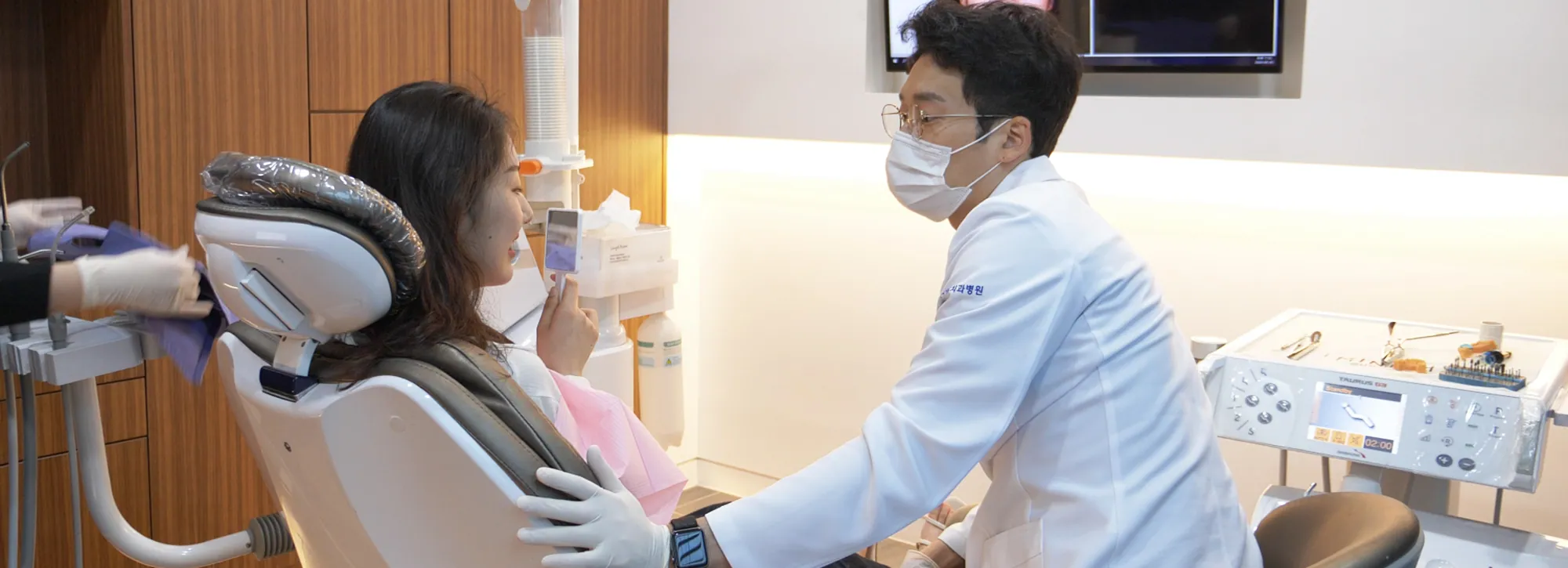
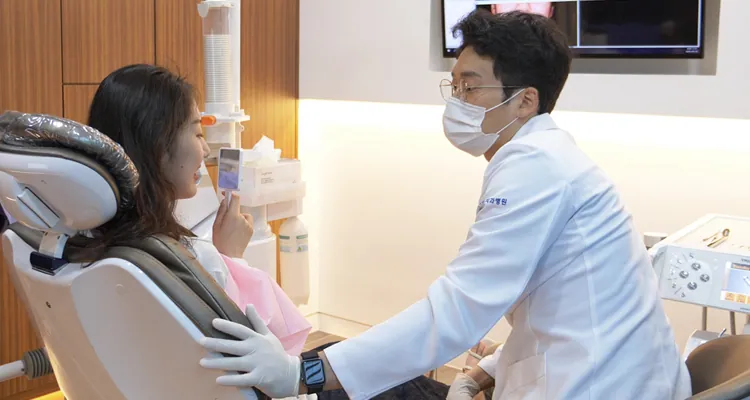
Whitening treatment at MINISH Dental Hospital
MINISH Dental Hospital offers fast whitening treatment not only for discolored teeth but also
for discolored gums
and non-vital teeth whose pulp (nerve) has died,
with care taken to minimize side effects.
Causes of tooth discoloration:
extrinsic and intrinsic factors
Tooth discoloration has many causes, which can be broadly divided into
extrinsic and intrinsic factors.
[ Extrinsic Factors ]
-
Food
Discoloration caused by pigments deposited on the tooth surface from external factors such as food and tobacco.
Typical stain-causing foods include black tea, green tea, coffee, wine and chocolate. -
Smoking
With smoking, the nicotine and tar in cigarettes build up on the teeth and turn them yellow or dark.
[ Intrinsic Factors ]
-
Aging
As the enamel on the outer surface wears down, the yellowish color of the dentin underneath shows through, making the teeth look more yellow.
-
Tooth trauma
When a tooth suffers an external impact, bleeding inside the tooth and the breakdown of blood cells form substances that stain the inside of the tooth and cause discoloration.
-
Root canal treatment (endodontic treatment)
Inadequate root canal treatment can leave necrotic tissue in the pulp chamber and cause discoloration, and discoloration can also progress from bacterial infection after root canal treatment. Certain filling materials used in root canal treatment can also discolor the tooth.
-
Medicine
Teeth can become discolored when compounds such as drugs or heavy metals are improperly ingested while the teeth are forming.
(e.g., tetracycline, fluoride)
Whitening type
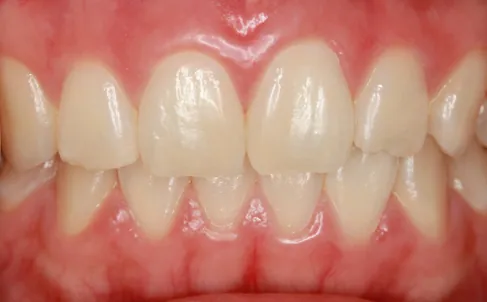
Vital Tooth Whitening (Vital Bleaching)
A procedure that restores discolored or yellowed teeth to their original shade, or makes them brighter, using high-concentration hydrogen peroxide or carbamide peroxide gel.
Vital tooth whitening falls into two main types:
professional in-office whitening (Office Bleaching) and at-home whitening done under the dentist’s instructions (Home Bleaching).
[ When Vital Tooth Whitening (Vital Bleaching) Is Needed ]
- If you are bothered by discoloration from staining
- If you are self-conscious about the color of your teeth
- If you want to make a better impression on the people around you
- If you want to smile with confidence before a wedding or job search
How Vital Tooth Whitening (Vital Bleaching)
Works
The whitening effect comes from breaking down the molecular structure of the stain compounds in the enamel layer.
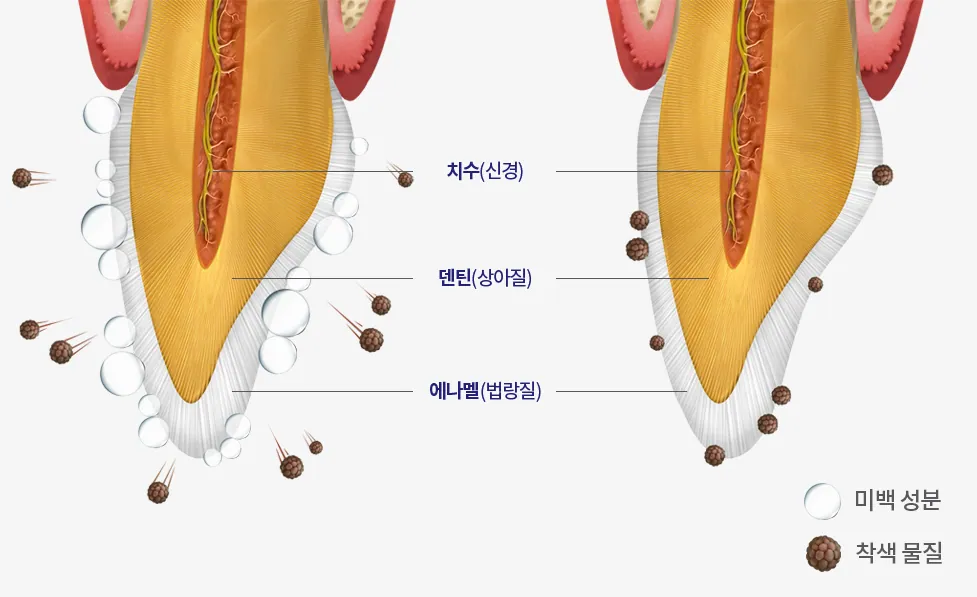
With whitening agent
Without whitening agent


The whitening effect comes from hydrogen peroxide (the whitening agent) breaking down the molecular structure
of the stain compounds in the tooth.
MINISH Dental Hospital
Professional Whitening (Office Bleaching)
This whitening treatment is carried out at the clinic after a consultation, following the dentist’s treatment plan and under professional supervision. A high-concentration
whitening gel is usually applied and then activated with light,
which may produce results in a short time.
At MINISH Dental Hospital, we perform scaling before whitening when needed to support effective whitening and provide four rounds of professional whitening over two visits.
-
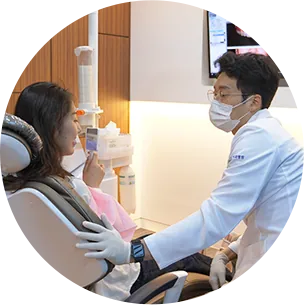
Pre-treatment consultation
-
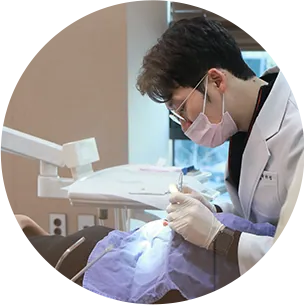
Scaling and
tooth polishing -
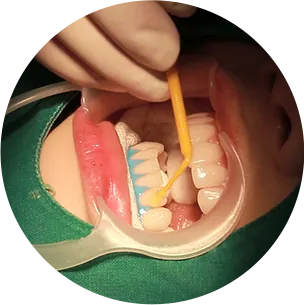
Gum protector and
whitening gel applied -
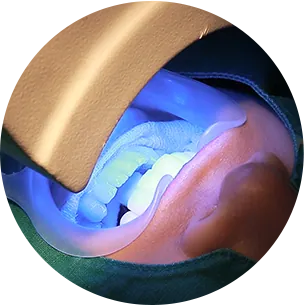
Light activation
-
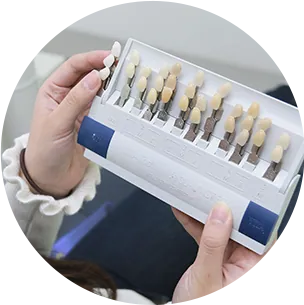
Checking the result
-

Post-treatment
care instructions
Whitening treatment at MINISH Dental Hospital in just one day!
Whitening treatment in just one day!
MINISH Dental Hospital
At-Home Whitening (Home Bleaching)
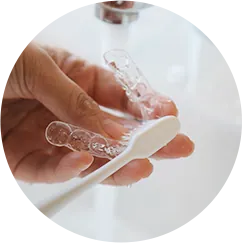
Using a custom at-home whitening tray made in MINISH Dental Hospital’s in-house lab, you apply whitening gel easily at home. The gel contains 10–15% hydrogen peroxide and works slowly over a longer period; combined with professional whitening, it enhances the effect and helps the results stay brighter for longer.
-
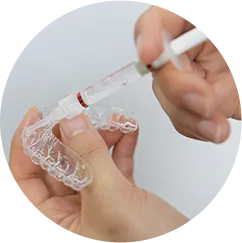 Dispense the right amount
of whitening gel -
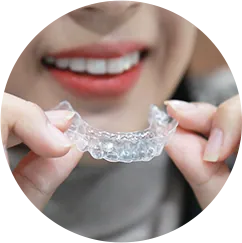 Wear the whitening
tray -
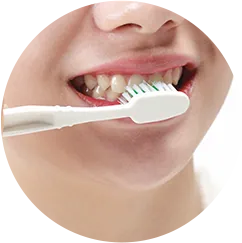 Remove, then
brush -
 Clean and store
the whitening tray
[ How to Use At-Home Whitening ]
- Dispense the whitening gel into the center of the front of the tray.
Be careful not to use too much, or the gel will overflow. - Put on the tray and press lightly so the gel spreads evenly,
then wipe off any excess gel with a cotton swab or tissue. - Wear the tray for at least 2 hours; depending on the degree of staining,
continue for about 2–4 weeks. - Remove the whitening tray and brush your teeth.
- Rinse the remaining gel off the whitening tray under running water, taking care not to deform the tray;
let it dry, then store it in its case.
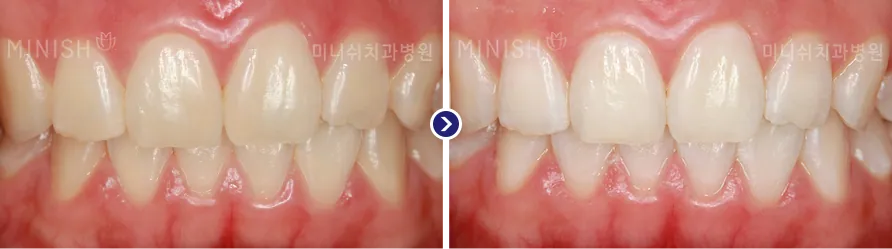
Vital Tooth Whitening: Before and After

Whitening type
Non-Vital Tooth Whitening (Non-Vital Bleaching)
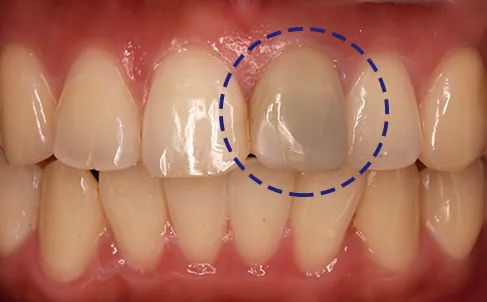
A non-vital tooth is a tooth whose pulp (nerve) has become
necrotic (lost its vitality) due to external stimuli.
When hemoglobin from the blood in the pulp (nerve) turns the tooth gray or dark brown,
non-vital tooth whitening is needed.
[ When Non-Vital Tooth Whitening (Non-Vital Bleaching) Is Needed ]
- If a tooth has changed color after root canal treatment
- If you want to brighten the underlying tooth color for an esthetic prosthetic treatment
- If a tooth has changed color due to trauma
How Non-Vital Tooth Whitening (Non-Vital Bleaching)
Works
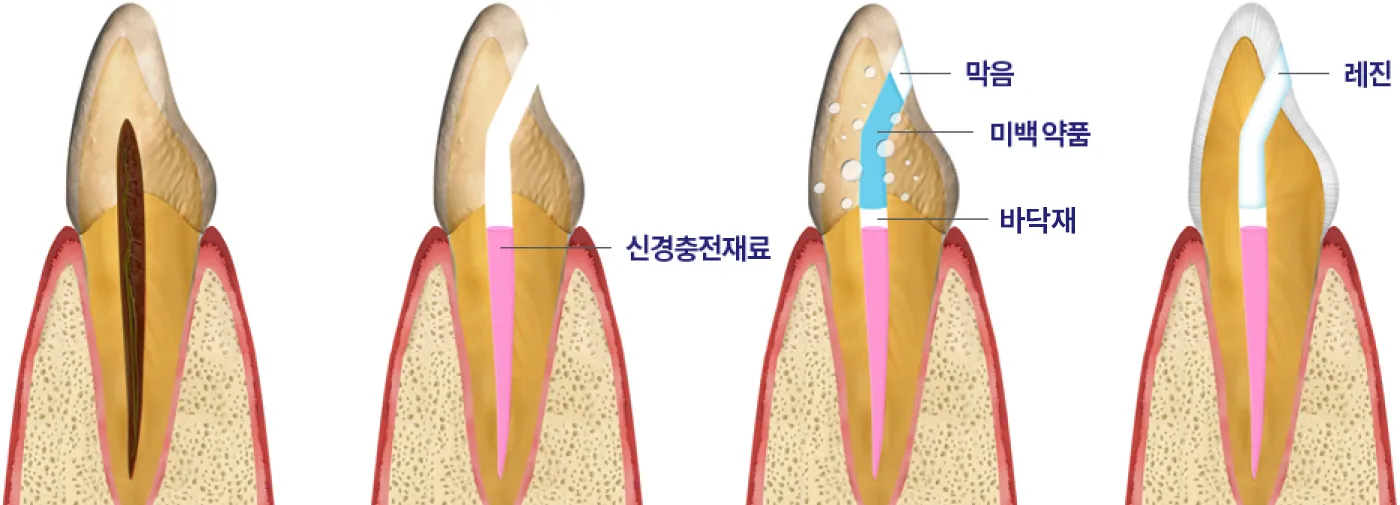
Because the discoloration comes from iron in hemoglobin penetrating the tooth’s mineral crystals,
placing a whitening agent (sodium perborate) in the space where the pulp (nerve) was removed whitens the tooth.
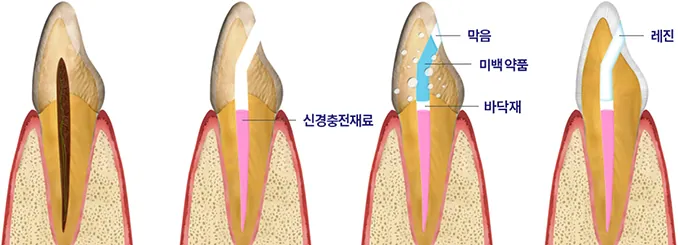
-
Discolored tooth Step 1
-
Root canal treatment complete Step 2
-
Whitening agent applied Step 3
-
Non-vital whitening complete Step 4
[ When Non-Vital Tooth Whitening Is Not Possible ]
- If delayed treatment has led to deterioration of the pulp (nerve) and root canal treatment is no longer possible,
non-vital tooth whitening cannot be performed.
Non-Vital Tooth Whitening: Before and After
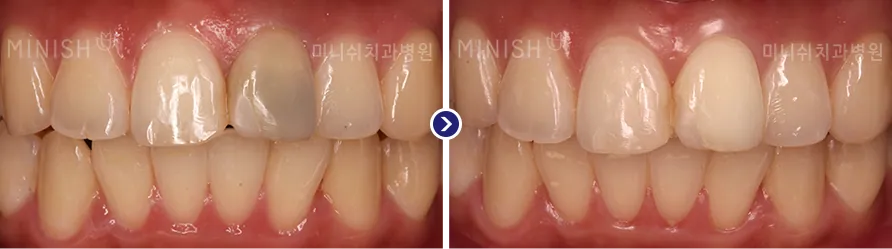
Whitening type
Gum Whitening (Gum Bleaching)
A procedure that removes melanin pigment deposited in the gums, returning darkly pigmented gums to a healthy pink.
A procedure that removes the dark, melanin-pigmented gum tissue, similar to a peel.
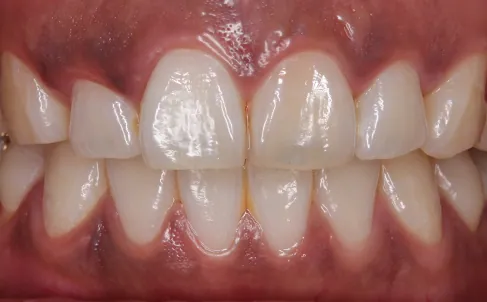
[ When Gum Whitening (Gum Bleaching) Is Needed ]
- Dark gums from congenital or acquired melanin pigmentation
- If the gums are discolored by metal prostheses or similar
- If tar and nicotine from smoking have stained the gums
- Gums darkened by excessive sun exposure
How Gum Whitening (Gum Bleaching)
Works
Working on a principle similar to a skin peel, this procedure removes the melanin pigment in the gum epithelium and
exposes the healthy gum tissue beneath the epithelial layer.
-
 Pigmented gums
-
 Removal of melanin pigment
from the gum epithelium -
 Evenly exposed
gingival connective tissue layer -
 Pink gums
(after 1–2 weeks)
Gum Whitening: Before and After
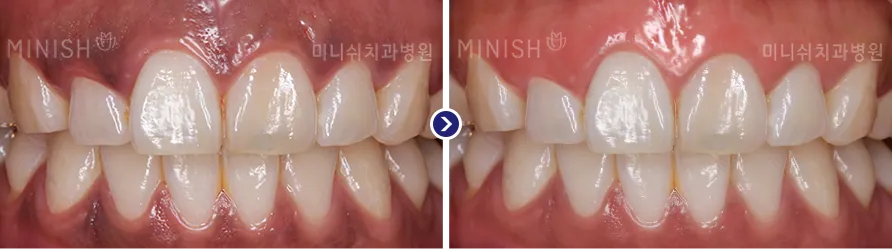
If whitening
does not solve it:
the MINISH solution

For congenital discoloration, severe discoloration from drugs such as tetracycline, age-related discoloration, discoloration from nerve damage, or staining due to a rough tooth surface, whitening alone has limits in achieving an esthetic result.
Also, if regular whitening treatment is not possible, we recommend the MINISH solution
as an option for improving tooth color while preserving natural tooth structure.
MINISH can improve not only color but also texture and translucency. We recommend having your teeth properly assessed first and then choosing a suitable treatment.
MINISH
Before and After