
Cavity Filling Cavities & Prosthodontics
MINISH Dental Hospital
Cavities & Prosthodontics
Prosthetic treatment restores the function and shape of teeth lost or damaged by cavities, root canal treatment, periodontal disease or accidents,
by making an artificial replacement for the tooth and surrounding tissue.
MINISH Dental Hospital
Who Needs Cavity & Prosthetic Treatment
At MINISH Dental Hospital, we remove only the tooth structure damaged by decay
and work to avoid unnecessary damage to the tooth, providing cavity and prosthetic treatment without overtreatment.
[ Who is it for? ]
- The tooth is badly damaged by severe decay
- The tooth is damaged by trauma (fracture)
- After root canal treatment
- When the jawbone at the site of the missing tooth is in poor condition and hard to regenerate, making an implant difficult (bridge)
MINISH Dental Hospital
Symptoms and Prosthetic Treatment by Cavity Stage
-
Stage 1
Enamel cavity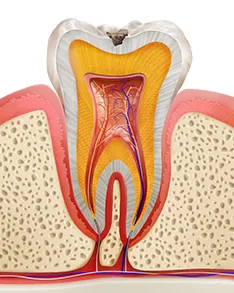
Stage 1. Enamel cavity
-
Pain
No symptoms,
no pain -
Cavity stage
Decay only in the outer layer
of the tooth, the enamel -
Treatment
Regular checkups, composite resin fillings
-
-
Stage 2
Tooth decay in the dentin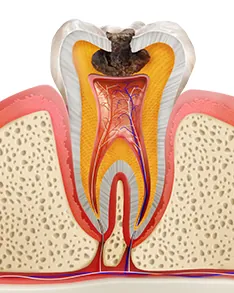
Stage 2. Tooth decay in the dentin
-
Pain
Sensitivity may be felt when eating cold or sweet foods -
Cavity stage
Decay has reached the dentin layer -
Treatment
Inlay, crown
-
-
Stage 3
Pulpitis (nerve inflammation)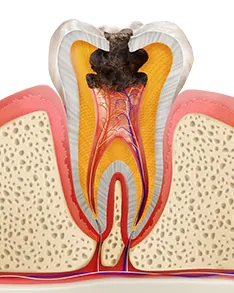
Stage 3. Pulpitis (nerve inflammation)
-
Pain
Pain with hot foods, or pain even at rest -
Cavity stage
Decay has passed through the dentin
to the pulp (nerve) -
Treatment
Root canal treatment + crown
-
-
Stage 4
Pulp (nerve) necrosis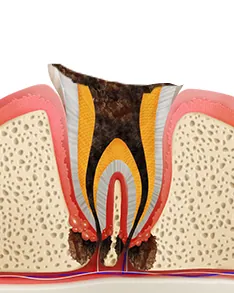
Stage 4. Pulp (nerve) necrosis
-
Pain
There may or may not
be pain -
Cavity stage
The final stage of decay: the pulp (nerve) dies and inflammation reaches the root tip; in severe cases, inflammation of the alveolar bone makes the tooth loose -
Treatment
Extraction followed by an implant or bridge
-
MINISH Dental Hospital
Cavity Treatment Options
The material is placed directly in the mouth

Resin
For a small cavity, the decay is removed and the material is placed directly
Instead of restoring the tooth directly in the mouth, an impression is taken, and the restoration is made outside the mouth and then bonded
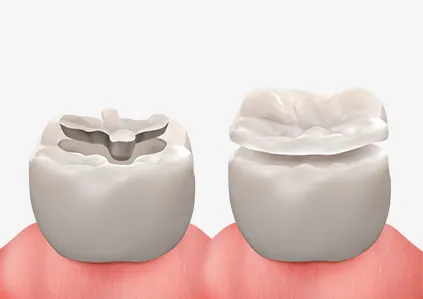
Inlay, onlay
Instead of restoring the tooth directly in the mouth, an impression is taken, and the restoration is made outside the mouth and then bonded
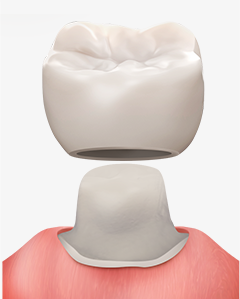
Crown
For extensive tooth damage, the whole crown of the tooth is covered

MINISH for Back Teeth
For extensive damage to the crown of a back tooth, only the damaged area is filled
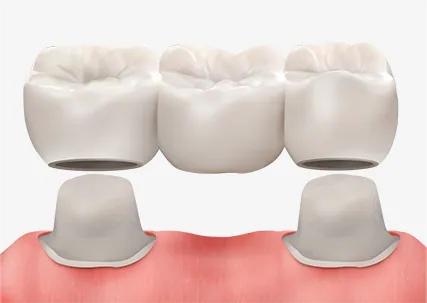
Bridge
An artificial replacement that uses the remaining teeth to restore a missing tooth: the teeth on both sides of the gap are reduced and capped, and the prosthesis replaces the missing tooth
For a large cavity in a molar,
MINISH instead of a crown
A crown is used to protect a back tooth (molar) when it has extensive damage, such as a large cavity, a crack or a fracture, or has undergone root canal treatment. However, crown treatment causes unnecessary loss of tooth structure and can also adversely affect gum health.
At MINISH Dental Hospital, we also provide MINISH treatment for back teeth (molars) to minimize removal of natural tooth structure and help protect gum health. MINISH for back teeth is also a conservative approach: if a complication such as a fractured restoration occurs, treatment with a conventional crown remains an option.
Designed with tooth preservation in mind
MINISH Bridge
MINISH Bridge replaces a missing tooth while minimizing damage to the teeth on both sides.
Depending on the case, there are two types: the wing bridge and the veneer bridge.
-
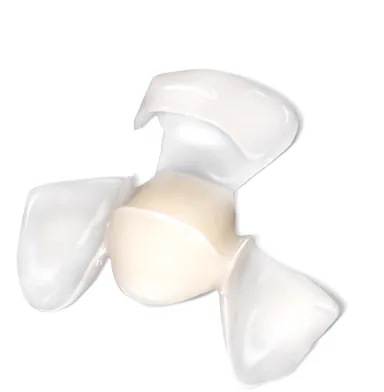
Wing bridge
Used when the teeth on both sides of the gap are healthy, and mainly recommended for those reluctant to have teeth reduced. The missing tooth is replaced with a prosthesis, which is bonded in place with wing-shaped attachments on both sides.
-

Veneer bridge
Used when the teeth on both sides of the missing tooth have wear, erosion or cavities and need their enamel layer rebuilt. Only the affected areas are selectively reduced, and MINISH tooth restorations for the damaged teeth are fabricated as a single unit joined to the artificial tooth (pontic) that replaces the missing tooth.
MINISH Dental Hospital
Cavity & Prosthetic Treatment System
01
Oral exams to prevent cavities
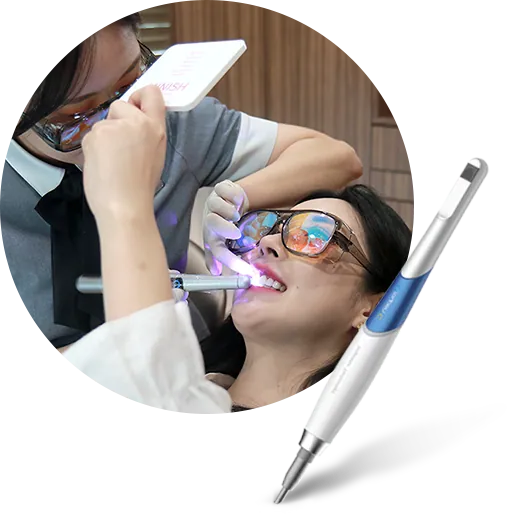
As tooth decay progresses, the pain, cost and time of treatment increase, so early detection is also important for preventing dental problems. Our hospital runs an oral exam system that uses recent cavity detection devices such as Qraypen C and Qrayview C to find and treat cavities between teeth (proximal cavities), which are hard to detect, at an early stage.
Learn about oral exams at MINISH Dental Hospital02
Anesthesia designed to reduce pain
-
[ 3-step anesthesia by experienced dentists ]
“Don’t endure the pain.” Have you been putting up with pain during dental treatment? At MINISH Dental Hospital, we do not continue treatment while a patient feels pain. Our experienced dentists use a detailed anesthesia system of 3 to 5 steps to keep you as comfortable as possible during treatment. We use an appropriate method to provide sufficient anesthesia and help reduce discomfort during treatment.


-
[ Anesthesia system for comfortable treatment ]
To make treatment comfortable for patients worried about dental anxiety and pain, we use an anesthetic warmer, anesthetic mouth rinse, topical anesthetic, a computer-controlled anesthesia device and sedation.
-

Anesthetic warmer
-

Anesthetic mouth rinse
-

Topical anesthetic
-

Anesthesia device
-

Sedation
-
03
Root canal treatment without overtreatment
Root canal treatment removes the infected nerve (pulp) of a tooth damaged by decay or trauma, disinfects the canal, and fills it with a replacement material; it is also called endodontic treatment. MINISH Dental Hospital does not perform unnecessary root canal treatment. A healthy nerve does not need root canal treatment, so we perform it only when the nerve of the tooth is damaged.
-
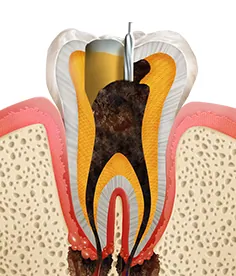
Damaged pulp
-
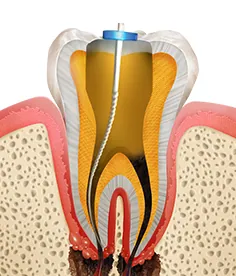
Pulp removal
-
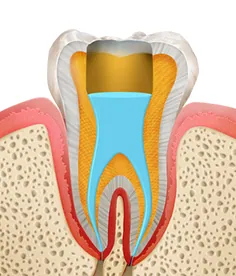
Canal cleaning
-
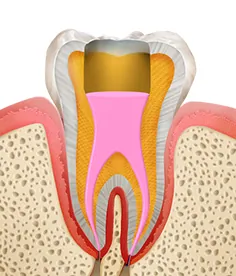
Canal filling
[ When root canal treatment is needed ]
- - Decay that is close to or has reached the nerve
- - Pulpitis caused by a cracked tooth
- - Inflammation caused by long-term irritation from various causes
- - Tooth sensitivity so severe that daily life is disrupted
MINISH Dental Hospital
One-Day Cavity Treatment
At MINISH Dental Hospital, digital equipment makes cavity treatment possible in a single visit.
(* This may vary depending on the patient’s dental condition.)
-
 Check-in
-
 Oral exam
-
 Detailed diagnosis
-
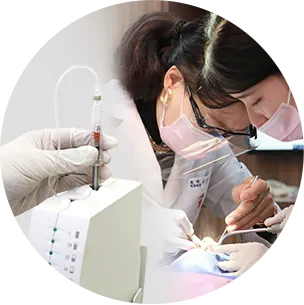 Anesthesia to minimize discomfort and removal of tooth decay
-
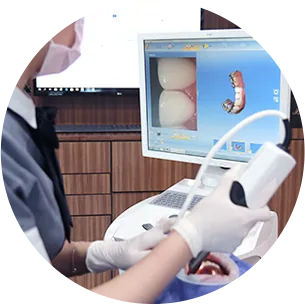 Impression taking
-
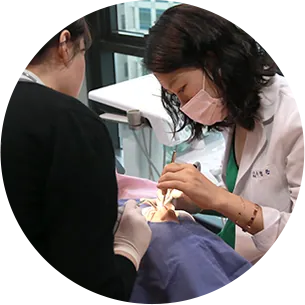 Same-day placement of the restoration
Cavity treatment in just one day!